FAQs
Have a question about BIBBA, our membership or the local honey bee? You're in the right place! We've pulled together answers to some of the most common questions we’ve received over the years.
About BIBBA
Yes! We became a Charitable Incorporated Organisation in 2023 (charity no: 1200969). To find out more, click here.
Beowulf Cooper (1917-1982), a Government (MAFF) entomologist, was a founding member of our organisation back in 1963. To learn more about his contributions and legacy, click here
BIBBA support a ban on imports. Importation poses a biosecurity risk and works against the development of local adaptation and varroa resistance. The mixing of different sub-species makes selection and improvement of our bees more difficult and it negates the effects of ‘natural selection’ which produces hardier bees. To learn more, click here
A very common question! For various reasons we do not supply members with breeding material. This includes the amount of work involved and we believe that bees should suit their local conditions.
The role of BIBBA is to encourage beekeepers to raise their own bees and queens. There is a facility for the purchase of bees and queens from members here
We recommend joining a local beekeeping group to connect with other like-minded individuals and work together to improve and conserve locally adapted bees.
Here is a list of active local groups
If you have any non-commercial news or information that you believe to be of interest to other members, feel free to contact us. We may use it in our online BIBBA Monthly (BM)
Membership
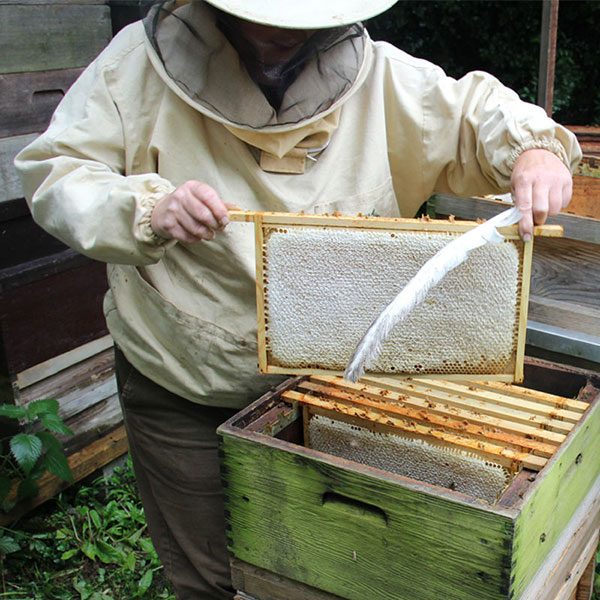
From exclusive member content to courses led by the UK’s beekeeping experts, there are a number of benefits to joining BIBBA. Find out more here
Of course! We also offer a discounted price for a joint membership. Find out more here
Yes, don’t worry. All previous editions of BIBBA Monthly are online, however only the latest edition is available to non-members. To read older versions, please sign up and login to the member area.
Bee knowledge
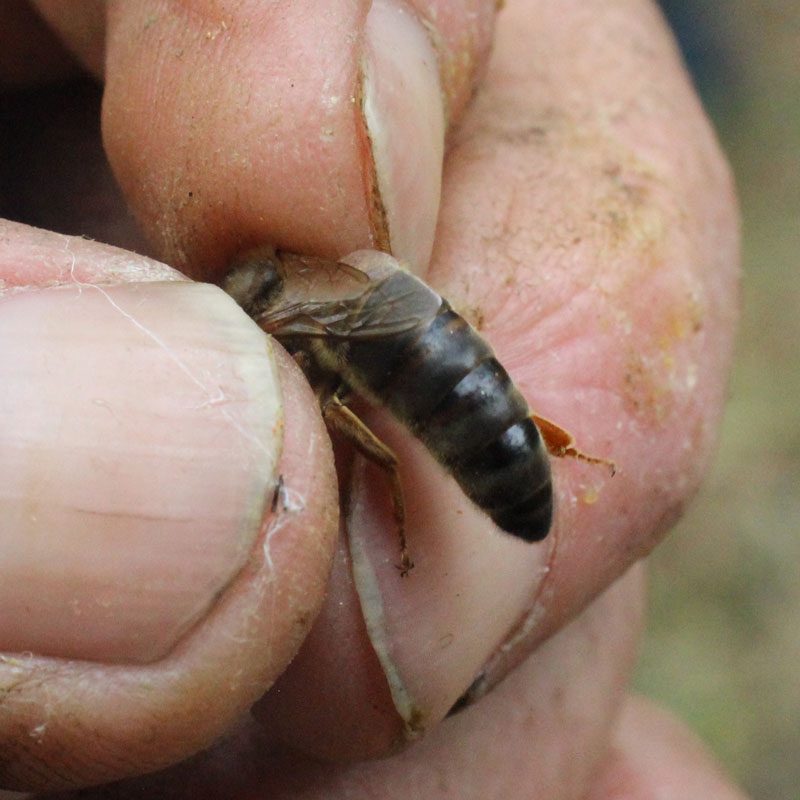
There are around 28 sub-species of the western honey bee. In the UK and Northern Europe, the native sub-species is the Apis mellifera mellifera (Amm), also known as the British Black Bee, Old English, Irish Black Bee and Brown Bee.
Many sub-species of bee have been imported into the UK and Ireland for more than 150 years. This has resulted in ‘pure stocks’ of bees becoming difficult to find.
‘Near native’ refers to bees which have both a native appearance and characteristics but may contain DNA from other sub-species.
Conditions can vary considerably across locations, even over a relatively short distance, and adaptation takes time to achieve.
Local bees are also accustomed to the specific diseases and environmental challenges of their area, making them more resilient and better suited to thrive.
By sourcing queens and bees locally, you help maintain strong, well-adapted colonies, reduce the risk of introducing pests and diseases from outside regions, and eliminate unwanted behaviour in future generations.