
CONTENTS
- Treat for Varroa in August?
- The Queen Excluder: More Than a Honey-Harvesting Tool
- Seasonal Nectar Gaps in Farmland Landscapes
- A laying-worker colony doesn't have to be a lost colony
June and July Gap
Apologies for the gap in production of BIBBA Monthly. Most of us have been very busy with the bees for the last two months. In addition, we are in the process of moving to a new membership system that will enable us to offer more to our members. This is taking up a lot of time for some of the trustees. We now aim to return to monthly issues. Nick Mawby
Do We Need to Treat for Varroa in August?
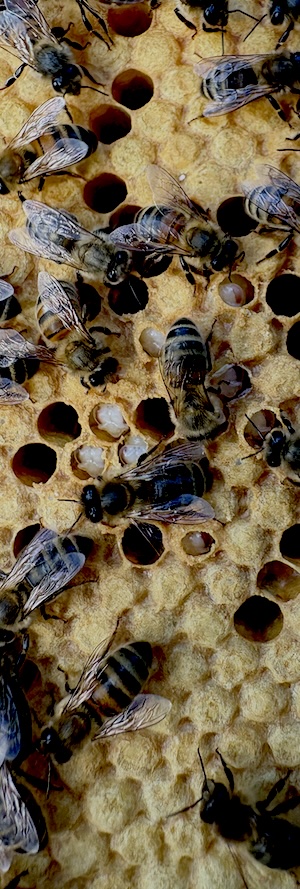 Steve McGrath
August is perhaps the most controversial month in the beekeeping calendar.
Many beekeepers have been taught that August automatically means "time to treat". Honey has been removed, mite numbers appear to rise sharply, and winter bees will soon be reared. It is understandable that many reach for a treatment without hesitation. However, for anyone interested in bee improvement and breeding for Varroa resistance, the question is rather different. The real question should be "What are my bees telling me?"
August is a Biological Turning Point
The colony is changing rapidly during late summer. The queen is gradually reducing her egg laying, drone production is ending, and the amount of brood steadily contracts. The colony is beginning the transition from summer workers to the long-lived winter bees that must survive until spring. This change has important consequences for Varroa.
During spring and early summer, mites spend most of their lives reproducing within sealed brood cells. As brood area contracts in August, there are simply fewer reproductive opportunities available. Increasing numbers of mites are forced onto adult bees (the phoretic phase), where they become far more visible and vulnerable to the bees' natural defence mechanisms.
Why the Mite Drop Often Increases
Natural mite drop often increases during August. At first glance this appears alarming, but it is not necessarily evidence that the colony is losing the battle. In fact, several biological processes occur simultaneously:
- brood area is reducing;
- more mites are present on adult bees rather than hidden in brood;
- hygienic bees remove infested brood;
- damaged mites are more likely to fall through the open mesh floor.
A larger mite drop can therefore indicate that the bees are successfully removing mites from the colony. Looking only at the number of mites on a monitoring board without understanding what the colony is doing can lead to entirely the wrong conclusion.
One Number Rarely Tells the Whole Story
Bee breeders have long recognised that single measurements are rarely useful. A colony should never be judged solely by one day's mite drop. Instead, ask a series of questions:
- Is the colony healthy and behaving appropriately?
- Is brood well patterned. This would ideally include uncapped and recapped brood cells.?
- Are any virus symptoms present?
- Are adult bee numbers remaining strong?
- Is the mite drop stable, increasing or falling over several weeks?
- How has this colony performed over previous years?
The answers together provide a much clearer picture than any single figure.
Resistance is About Behaviour
One of the most exciting developments in modern bee breeding has been the recognition that bees themselves possess numerous mechanisms for controlling Varroa. These include:
- Varroa Sensitive Hygiene (VSH), where workers detect and remove infested brood.
- Uncapping and Recapping behaviour, where bees inspect suspect brood and reseal cells without removing the developing pupa.
- Suppressed mite reproduction, in which mites entering certain colonies produce fewer viable offspring.
Also, though less is known about this, Grooming, where mites are removed from adult bees and frequently damaged in the process. Much is written but the science appears to be incomplete or inconsistent on this aspect.
None of these traits eliminates Varroa completely. Instead, they reduce the mite's reproductive success until the parasite and host reach a more stable balance. Our role as bee breeders is to encourage these natural behaviours through selection rather than continually replacing them with chemical intervention.
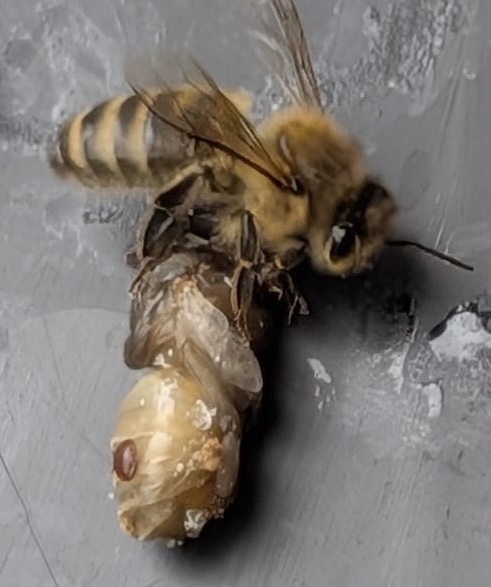 Steve McGrath
Treatment Should Support Improvement, Not Prevent It
There is an important distinction between managing colonies and breeding bees. If a colony is collapsing under heavy mite loads or virus pressure, treatment may be entirely justified on welfare grounds. Allowing colonies to die unnecessarily helps neither the bees nor the beekeeper.
However, routinely treating every colony every August removes much of the opportunity to discover which colonies naturally regulate their mite populations. If every colony receives identical treatment regardless of performance, we learn very little about their genetic potential. Good breeding depends on differences being allowed to reveal themselves and those differences being used in the breeding selection process.
Preparing Winter Bees
The real objective in August is not simply achieving a low mite count, it is producing healthy winter bees. Winter bees differ physiologically from their short-lived summer sisters. They accumulate larger nutrient reserves, maintain the winter cluster and must survive for several months. Heavy virus transmission during their development can shorten lifespan considerably. Consequently, monitoring remains essential.
Where colonies demonstrate effective mite control, continue observing. Where colonies clearly exceed acceptable thresholds, intervention may still be the responsible decision. Selection for resistance does not mean ignoring bee welfare. It means making evidence-based decisions while continually favouring colonies that require progressively less assistance.
Breeding Towards Sustainability
Every treatment decision has two timescales. The first concerns this winter. The second concerns the next decade.
If our ambition is to establish locally adapted, naturally resistant bee populations, we should avoid asking only whether a colony needs treatment today. We should also ask why it needs treatment, whether another colony under identical conditions does not, and what those differences tell us about the genetics we should carry forward. The aim is not treatment-free beekeeping at any cost. Rather, it’s to discover bees that need less treatment because they have evolved, or have been carefully selected, to defend themselves.
August is therefore not simply the month to treat. For the bee breeder, it is one of the most informative months of the entire year. It is the month when the bees begin to reveal whether they can truly live with Varroa—or merely survive because we intervene.
On a personal footnote to this article, I regularly remove free-living bees from buildings and, occasionally, trees. Three colonies this week. Those bees that have been in a building for at least one winter have had no inspections, feed or treatments. These ‘survivor’ bees have remarkably few diseases, varroa is difficult to spot and the bees tend to be darker in colour. Make of that what you will.
Karl Colyer
 Steve McGrath

The Queen Excluder: More Than a Honey-Harvesting Tool
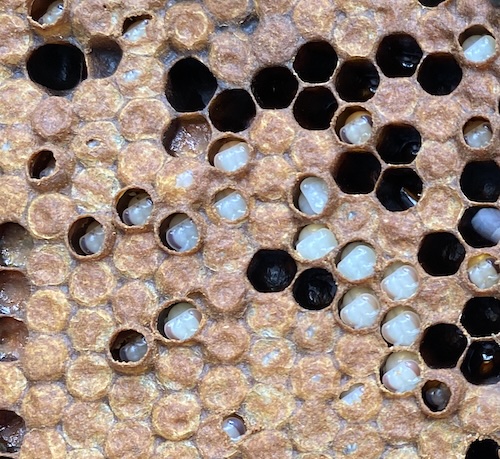
The queen excluder remains controversial, but evidence suggests that, under European conditions, it does not adversely affect colony development or honey production when used appropriately. Its benefits extend beyond keeping brood out of honey supers. By restricting the queen to the brood nest, an excluder can help create a separate, queenless area containing abundant nurse bees — an effective arrangement for royal jelly production and queen rearing. This allows the queen to continue laying while worker bees above the excluder respond strongly to introduced queen larvae. Used with strong colonies and good nutrition, the excluder can therefore be a valuable management tool rather than a barrier to colony productivity. Read the full article
Paper Review: Seasonal Nectar Gaps in Farmland Landscapes
Timberlake et al. (2019)
Phenology of farmland floral resources reveals seasonal gaps in nectar availability for bumblebees
This paper is a straightforward observational study examining the seasonal availability of nectar sugars across farmland habitats in North Somerset. Although the work focuses on bumblebees, many of the findings will be immediately familiar to beekeepers, particularly the identification of recurring nectar shortages through the season.
The researchers measured floral sugar production across four farms and compared this with the estimated sugar requirements of local bumblebee populations. The resulting analysis revealed several distinct periods where nectar demand exceeded supply, notably the pre-spring period, the well-known June gap, and a further shortage during August and September. These findings closely mirror the dearth periods regularly observed by honey bee colonies.
One particularly interesting observation was the substantial variation between farms. On one site, spring sugar availability was actually lower than that recorded in July, reversing what many would consider the normal pattern. Another farm exhibited extremely poor nectar availability during midsummer. Such variation highlights the importance of local conditions and helps explain why honey bees, with their extensive foraging range, often cope better with forage shortages than many wild pollinators.
By combining measurements of nectar availability with the seasonal requirements of bumblebee colonies, the authors were able to quantify monthly sugar deficits. This approach not only identifies periods of forage scarcity but also highlights where targeted planting schemes could be used to bridge these gaps. In many respects, this is the central value of the study.
Methodology
The fieldwork involved detailed vegetation surveys using transects across the study farms. Floral abundance and nectar production were measured from a substantial number of sampling points, providing a comprehensive picture of available sugar resources.
There is, however, a potential weakness in the sampling approach. Many wild flowering plants occur in clusters rather than being evenly distributed. Hedgerow species, woodland edge plants and field-margin flora often establish in patches due to seed dispersal patterns and modes of reproduction. Random sampling within a transect therefore carries the risk of missing important nectar-producing species entirely, potentially underestimating local nectar availability.
Key Floral Resources
One of the most useful outputs from the study is the table showing which plant species contribute nectar resources at different times of year. Interestingly, relatively few species accounted for the majority of sugar production.
Beekeepers would benefit from identifying whether these key forage plants occur within the foraging range of their own apiaries. A simple survey of local farmland, woodland and hedgerow habitats can provide valuable insight into likely nectar availability throughout the season.
Implications for Beekeeping
For beekeepers operating in areas characterised by strong spring flows followed by a prolonged summer dearth, the message is clear. Colonies must be managed to take full advantage of the brief period of abundance. Building colony strength early and ensuring sufficient foraging force during the main spring flow can make a significant difference to honey yields.
The study reinforces an often-overlooked principle: successful beekeeping requires a thorough understanding of local forage conditions. Management decisions should be based not only on colony condition but also on the seasonal pattern of nectar availability surrounding the apiary.
The paper's broader objective is ecological rather than apicultural. By identifying forage gaps, the authors provide evidence supporting the introduction of additional nectar-producing plants into agricultural landscapes. Since the paper's publication in 2019, many farmers have adopted pollen and nectar mixes specifically designed for pollinating insects. In my own observations, clovers and several companion species included in these mixes have become significant nectar sources and appear capable of reducing some of the identified forage shortages.
Farm crops must also be considered when assessing local forage availability. Large-scale flowering crops can temporarily dominate nectar production and significantly alter the baseline patterns observed in more natural habitats.
The study also found that woodland habitats can provide surprisingly high levels of nectar production, while pasture generally exceeded hedgerows in terms of overall sugar supply.
Future Research
The authors did not examine pollen availability through the season, although they identified this as an important area for future work. Such a study would be particularly valuable, as pollen shortages can have consequences for colony development that differ markedly from nectar shortages.
Weather effects were also outside the scope of this paper but remain highly relevant. Nectar secretion is strongly influenced by temperature, humidity and rainfall, and beekeepers are well aware that abundant blossom does not always translate into a honey crop. Lime trees provide a classic example: trees may flower profusely yet attract few honey bees under unsuitable weather conditions. A comprehensive study identifying the environmental conditions under which major nectar plants produce optimal nectar would be of considerable practical value.
Final Thoughts
How many beekeepers maintain a detailed inventory of the principal nectar sources within flying distance of their apiaries? Of those who do, how many actively adapt their management to the seasonal availability of those resources?
Commercial bee farmers almost certainly do. The rest of us might benefit from following their example.
Perhaps an even more revealing question is this: if we walk the hedgerows around our apiaries, can we identify the plants that sustain our bees throughout the year? This paper suggests that we should.

Paul Verrier
The Laying Worker Problem
This year gave many of us a hard lesson in the problems of raising a new colony through a split or any method that required a queen to be reared and mated. The poor weather we had after the hot early spring left a lot of attempts at splitting colonies as total failures and beekeepers were being left with multiple instances of hopeless queen-lessness colonies. What was a thriving hive, with a new queen, gathering stores and everything looking rosy, suddenly found that the queen failed to mate and one or more workers took over and started laying unfertilized eggs.
Now, how to deal with this conundrum? The old wife’s tale suggests bunging in a new queen in a hope of curing the problem. The trouble is, this tends to be an expensive further failure and the new queen is often left to chill or destroyed before even hatching. If it does hatch, it gets killed because there is enough queen-like pheromone (ODA-9) being produced by the laying workers to make the colony think it has a queen. The workers do not want another one thank you.
Turn to your bee books and find the solution. Hard to believe – "cart the hive across the field and shake all the bees out onto the grass or into the hedge. Carry the kit all back (don’t put it back together) and hope any returning bees find a suitable home in another colony."
The idea is that the laying workers will not make it back. They may in fact make it back, but if they do get allowed into another colony that is queen right, they will probably quickly go off lay. More likely, the laying worker won’t be let in. How many bees will get into other colonies? Assuming they are all at least a week old, they will make it back to the old hive location, and you may get some extra bees into a few colonies without too much fighting going on. What about the remaining brood if there was any? If there were really laying workers, there was probably very little fertilized brood present anyway, as the brood pheromone would have stopped a worker developing ovaries to the point of producing eggs. Basically, you have to toss the colony and are left with brood frames that have some stores, a little fertilized brood, a small amount (or large amount if you left it a long time before dealing with it) of drone brood in worker cells and a lot of worker bees being left to their own chances. Essentially, you throw the colony away. This cannot be a good solution.
I wanted to make use of the equipment and I wanted to keep the colony going so that I had another independent honey gathering colony. How can this be done? The trick is to understand what keeps a worker bee from developing its ovaries. It has been established that the larva of a fertilized egg issues a pheromone that suppresses the physiological action that causes the worker ovaries to develop. The queen pheromones also help to suppress the ovary development, but the pheromone from the open brood cells plays the most significant effect. So, if the queen is present and not laying, the effect of her pheromones is enough to suppress the worker ovaries, take the queen away but leave open brood, then the brood provides all the chemicals needed to suppress ovary development. When the brood is capped over, the pheromone source stops producing and the worker bees start to develop ovaries. It is rarely just one worker that starts to lay and in a colony that has been queenless for a few weeks, there can be many laying workers present.
Here then is the hint to a solution. Add some open brood from a queenright colony. It will need to be a reasonable amount of open brood, so two frames would be better than one. The pheromone will reduce the ovaries of the laying workers again. After about a week, check and put in another frame of brood, this time with some eggs and you are highly likely to find that the colony starts to rear its own queen (or several). You can now proceed to either remove a sealed queen cell in due course and supply your own queen and bring on the newer queen(s) in an incubator or mini nucleus hive for later use. The colony will continue to gather honey and pollen and while it will have been set back a few weeks, it is not a total loss.
This year, I was faced with having six hopelessly queenless laying worker colonies. Not having a load of spare young brood frames handy, I decided to just amalgamate all the brood boxes together and pop a couple of open brood frames into the bottom box. Because there were so many colonies being mixed up, there was little chance a mass fighting (why is that I wonder – three or more colonies don’t fight it out), so I had a big stack which I left for a week. On the following week, I took out the top four brood boxes, re-organised the frames to keep a good mix of stores in the bottom two boxes and added two more frames with plenty of open brood sourced from two other colonies (all bees gently removed with some handy dead grass). On top of this went all the frames of supers that had honey in them. One week later, on opening up, I found two queen cells, no sign of young drone brood and plenty of activity storing honey into the supers. At this point, I took one of the queen cells and some brood frames and set about creating a second nucleus colony. I then left the colonies alone for a month and was happy to find a nice new colony from the second queen cell and a thriving colony from the first. So, six ‘lost’ colonies were recovered into two viable colonies. I could have done more I suspect if I had enough local brood to use, but I did not want to bring frames between apiaries for disease control reasons.
Is it worth the hassle? Yes, because I did keep extra colonies going and used a large volume of worker bees to gather a fair amount of extra honey which was later harvested. The argument that the workers would only live for a month or so after laying workers appeared and that it would take that long at least to get a queen in place and laying, is a little specious because all I am doing is making a slightly slower split, but without removing half the workers. So, I think that overall, saving a laying worker colony is worth the effort.
If you have one or two laying worker colonies, this method is straightforward and it worked for me. Give it a go. If, like me you ended up with a load of laying worker colonies, follow my example of putting them all together and get them to give you several queen cells which you can then use to make multiple nucs up with splits of the remaining workers plus some donated mature brood to get it going.
Good luck and happy beekeeping.
A laying worker colony doesn't have to be a lost colony